Hernia Surgery Adelaide
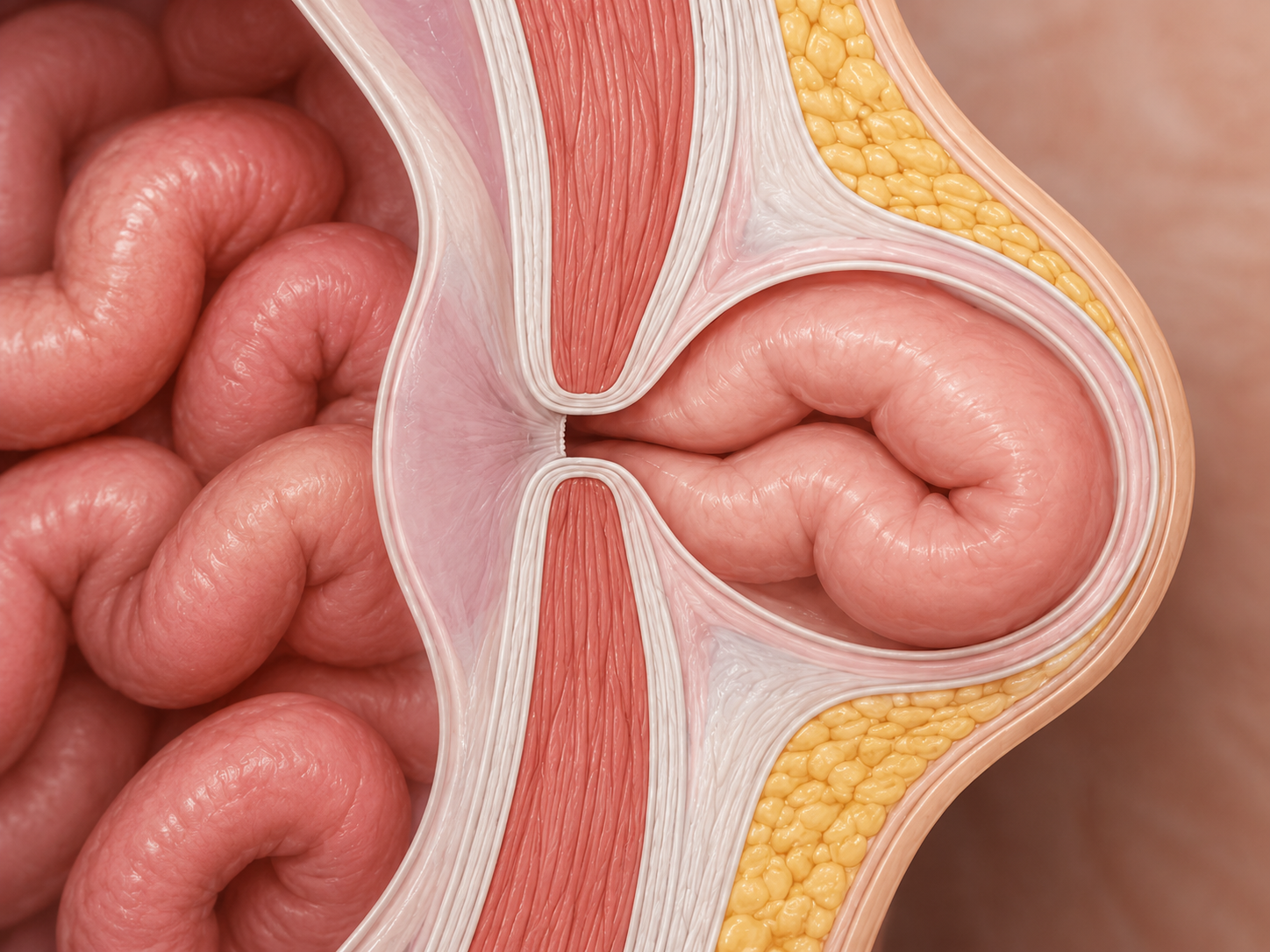
A hernia occurs when tissue pushes through a weakness in the muscles and connective tissues of the abdominal wall. It may appear as a lump or swelling and can cause discomfort during lifting, coughing, exercise or everyday activities.
Dr Michael France assesses and treats common hernias as well as larger, recurrent and more complex abdominal-wall hernias.
Types of hernia treated
- Inguinal and femoral hernias – occurring in the groin
- Umbilical and epigastric hernias – occurring around the umbilicus or in the upper midline
- Incisional hernias – developing through the site of a previous abdominal operation
- Recurrent hernias – returning after an earlier repair
- Complex abdominal-wall hernias – including large defects, multiple previous repairs and separation of the abdominal muscles
Does every hernia require surgery?
Not every hernia needs to be repaired immediately. A small hernia causing few or no symptoms may sometimes be safely observed. Surgery is more likely to be recommended when a hernia is painful, increasing in size, interfering with normal activities or at risk of trapping bowel or other tissue.
The decision is based on the type and size of the hernia, its symptoms, previous operations and the patient’s general health and preferences.
How are hernias repaired?
Hernias may be repaired using an open or laparoscopic approach. The most appropriate technique depends on the location and complexity of the hernia and whether it has been repaired previously.
Small defects can occasionally be closed with sutures alone. For many adult hernias, surgical mesh is used to reinforce the weakened abdominal wall and reduce the likelihood of recurrence. The proposed position and type of mesh, together with its potential benefits and risks, will be discussed during consultation.
Where appropriate, laparoscopic surgery can offer smaller incisions and a relatively rapid recovery. Open surgery may provide a better and more durable reconstruction for larger or more complex abdominal-wall defects.
Complex abdominal-wall reconstruction
Incisional and recurrent hernias sometimes require more than simply closing the visible defect. Surgery may involve restoring the abdominal muscles towards the midline and positioning mesh within the deeper layers of the abdominal wall.
Dr France performs retromuscular abdominal-wall reconstruction, including Rives–Stoppa repair and, when necessary, transversus abdominis release (TAR). The operation is individually planned using the clinical examination and, for more complex hernias, CT imaging.
In selected patients with substantial excess abdominal skin following weight loss, hernia repair and abdominal-wall reconstruction may be combined with an abdominoplasty. Whether this is suitable depends on the hernia, previous surgery, weight stability and individual risk factors.
Recovery after hernia surgery
Recovery varies considerably according to the type of repair. Many patients having straightforward groin or umbilical hernia surgery can return to light activities relatively quickly. Recovery from complex abdominal-wall reconstruction takes longer and may involve several nights in hospital.
You will receive individual advice about wound care, pain relief, driving, returning to work, exercise and lifting.
When is a hernia urgent?
Seek urgent medical attention if a hernia suddenly becomes very painful, firm or cannot be pushed back in, particularly if this is accompanied by vomiting, abdominal distension, fever or redness over the swelling. These symptoms can indicate that tissue or bowel has become trapped.
Arranging an appointment
A consultation with Dr Michael France will include assessment of the hernia, discussion of whether surgery is necessary and explanation of the most appropriate repair options.
Please bring any relevant imaging reports and details of previous abdominal or hernia operations. A referral from your general practitioner is required to receive the applicable Medicare rebate.